
Moisture Meter Reading Chart
Select your meter. Enter your reading. Get a real answer — not a generic chart.
Step 1 · Select your meter
Step 2 · Enter your reading
Pro mode — document a full inspection & print a report
Thresholds
Full Property Inspection
Log readings by area → generate a branded assessment report.
Your Company Info — appears on report header
How to Read a Moisture Meter
Moisture meters measure the amount of water in building materials. The reading tells you whether a material is dry, damp, or saturated — but what the number on your screen actually means depends entirely on which meter you're holding and which mode you're in.
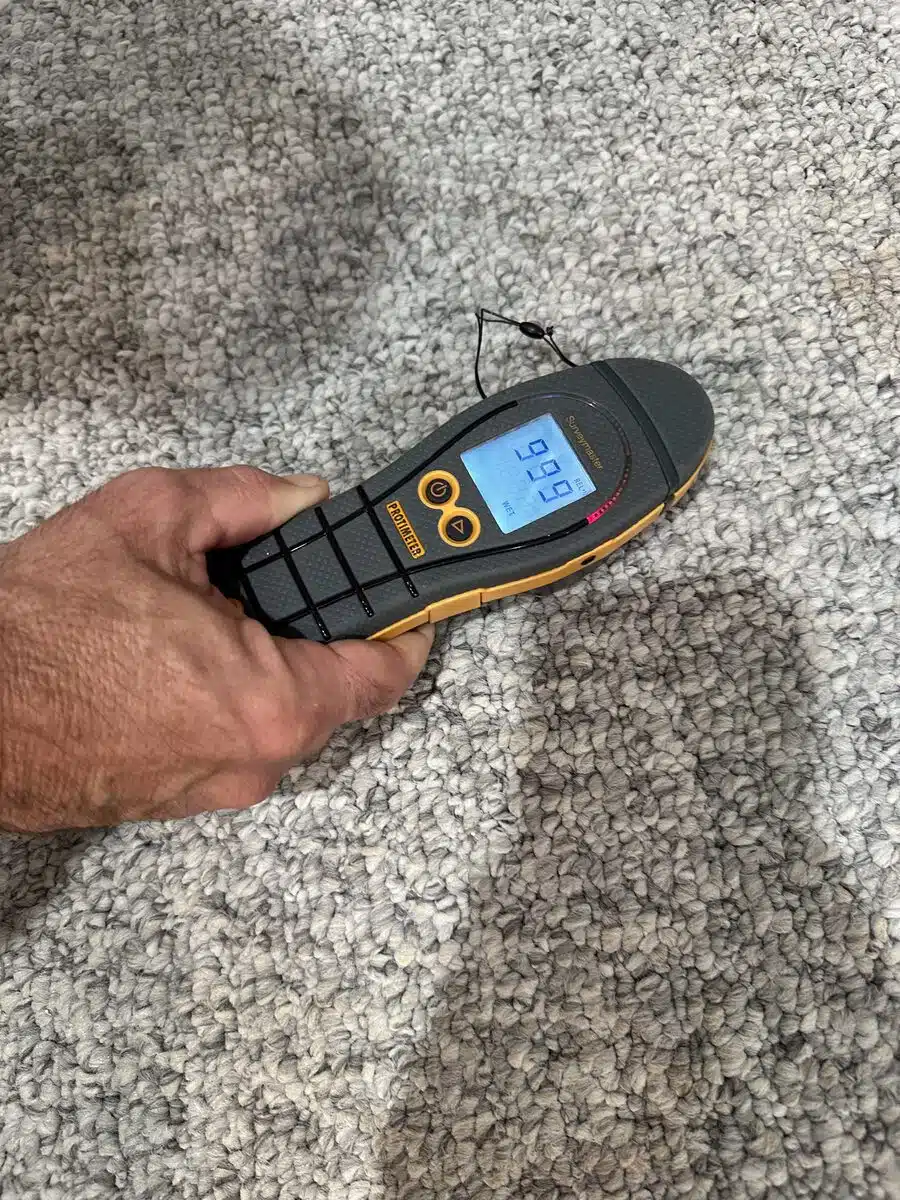
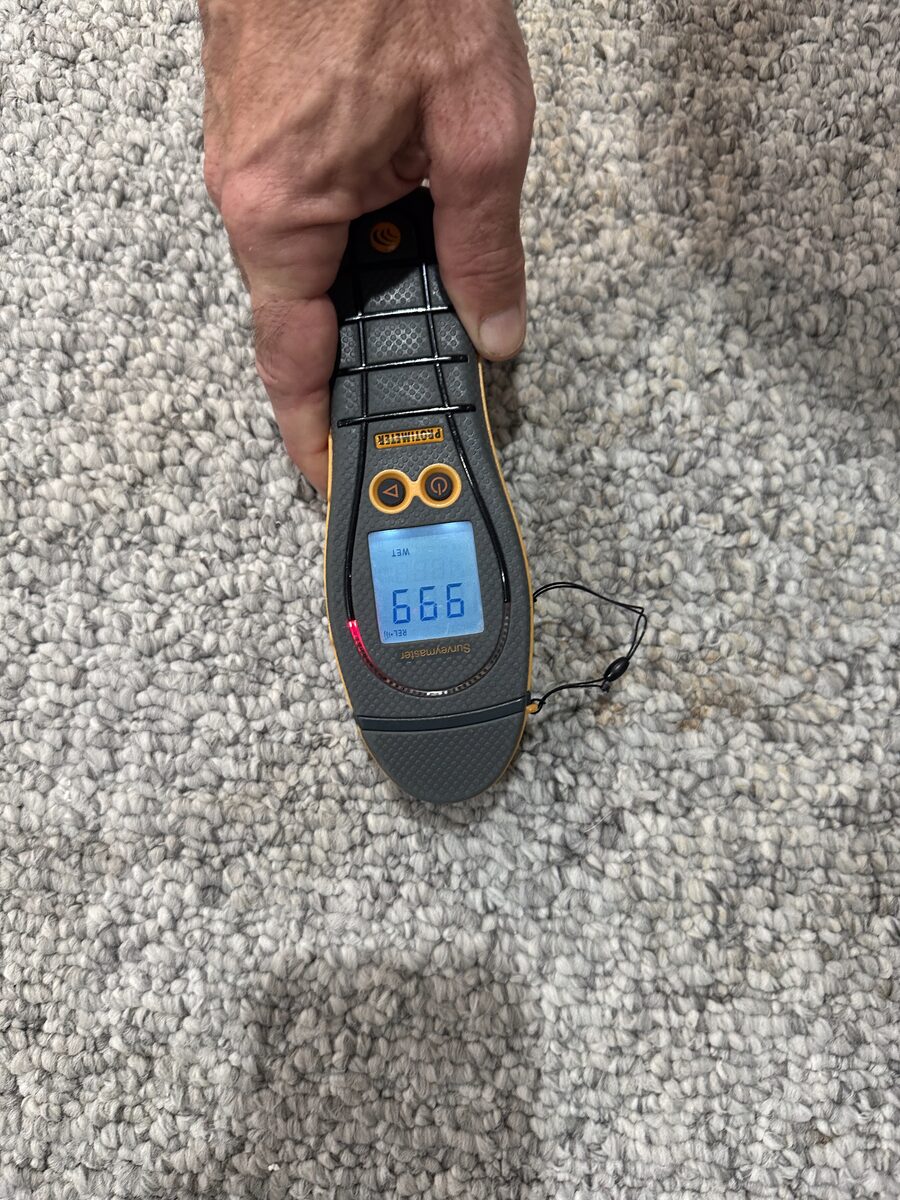
Most professional meters fall into two categories: pin-type meters that insert metal probes into the material and measure electrical resistance, and pinless (scanner) meters that use electromagnetic signals to detect moisture without penetrating the surface. Many professional meters — like the Protimeter Surveymaster — offer both modes in one device.
The critical mistake most people make: reading a number off their meter and comparing it to a generic chart that uses a completely different scale. A Protimeter reading "22" on drywall means something very different than a Delmhorst BD-2100 reading "22" on the same drywall — because the Protimeter reads WME (Wood Moisture Equivalent) while the Delmhorst has a dedicated gypsum scale reading true %MC.
That's why we built this tool. Select your actual meter, choose your mode, and get thresholds that match the numbers on your screen.
What the Scales Mean
%MC — Moisture Content
True percentage of moisture by weight in the material. Wood at 15% MC means 15% of the sample's weight is water. This is the most accurate measurement, but only works when the meter is calibrated for the specific material being tested. The Delmhorst BD-2100's gypsum scale and most meters' wood scales read in true %MC.
WME — Wood Moisture Equivalent
Most pin meters — including the Protimeter Surveymaster, Protimeter Mini, and General Tools MMD4E — read on a WME scale. Even when you stick the pins into drywall or concrete, the number represents what a piece of wood at the same electrical resistance would read. The thresholds are the same across all materials: dry below 17, at risk 17–20, wet above 20. This makes WME useful for quick comparative assessments across different materials.
Relative / Comparative (REL)
Pinless scanners like the Protimeter's search mode (0–999) and the Tramex MEP comparative scale (0–100) use relative scales. The number is not a moisture percentage — it's a signal strength indicator. A reading of "55" doesn't mean 55% moisture. It means the meter detected a certain level of electromagnetic response. Relative readings are most useful when compared to a dry baseline on the same material.
Moisture Meter Reading Chart by Material
The following thresholds apply to pin-type meters reading WME, which is the most common scale used in the field. If your meter has a material-specific scale (like the Delmhorst gypsum scale), use the tool above with your specific meter selected for accurate thresholds.
Drywall (Gypsum Board)
On a WME scale: normal below 17, elevated 17–20, concern 20–28, action required above 28. Drywall absorbs moisture quickly but doesn't dry easily. Readings in the concern range or higher often mean the drywall needs to be opened or replaced. Mold risk increases significantly when drywall stays above 20 WME for more than 48 hours. If you're seeing elevated drywall readings in Columbus, water damage restoration may be needed before the problem spreads.
Drywall that reads wet usually means opening the wall, drying the cavity, and patching. Wall water damage repair cost in Columbus breaks down what that runs.
Wood Framing & Studs
Normal below 17 WME. Wood decay fungi activate around 20% MC. Sustained readings above 20 on structural lumber are serious — wood rot can compromise load-bearing capacity. The most common culprits in Columbus homes are slow plumbing leaks behind walls and condensation in unventilated cavities.
Concrete & Slabs
Concrete readings are tricky because concrete naturally holds more moisture than wood or drywall. On a WME scale, readings up to 17 are typical for cured concrete. Elevated readings often indicate vapor drive through the slab (missing or failed vapor barrier) or hydrostatic pressure from the water table. In low-lying Columbus neighborhoods like Franklinton, elevated slab readings are common year-round.
OSB / Plywood Sheathing
Normal below 17 WME, but OSB requires special attention because it swells permanently when moisture content stays elevated. Unlike solid wood, which can dry and return to its original dimensions, OSB delaminates and expands irreversibly. In post-2000 Columbus construction (New Albany, Powell, Westerville subdivisions), OSB is the primary exterior sheathing — even "concern" level readings on exterior walls are urgent.
Elevated readings across sheathing or subfloor mean the drying equipment has to match the space. The dehumidifier size calculator sizes the unit before you rent or buy.
Hardwood Flooring
Normal below 10% MC on a wood-calibrated scale, or below 17 WME. Elevated readings cause cupping (edges curl up) or crowning (center pushes up). The moisture source must be stopped and the subfloor dried before any refinishing. Standing water on hardwood for more than 24 hours typically requires professional water extraction and structural drying.
Central Ohio Field Intelligence
Based on 2,400+ restoration projects across the Columbus metro area.
After a leak: how do you know the wall is actually dry?
A wall is dry when it reads the same as that material in a part of the house the water never reached, and it stays there. Getting there means checking the same spots every day until the numbers stop falling and match.
What reading counts as dry after a leak?
There isn't one number for every wall. Dry means the wet material now reads the same as that material in a room the water never reached. That is your dry baseline. On a WME pin meter the baseline usually sits below 17, but old plaster, brick or a cool basement can read differently. Match the baseline on the same material, not a chart value, before anything gets closed up or painted.
Why does the wall feel dry but still read wet?
Paint and the paper facing dry first. Underneath, water wicks up the gypsum, sits in the bottom plate and soaks into the insulation inside the cavity. A pin meter only reads at the depth of its pins, so a quick surface check can miss it. Take readings low on the wall, just above the baseboard, and at the bottom plate if you can reach it. That is where wet drywall hides longest.
How often should readings be taken while things dry?
Every day, at the same marked spots, written down. The numbers should move down steadily. When they stall, something is wrong. Water may be trapped behind cabinets or vinyl, the leak may still be active, or the dehumidifiers may not be keeping up with the space. Daily checks tell you when to move equipment, open a cavity, or stop. Pulling equipment on a guess risks sealing up a wet wall.
Why do the readings matter for an insurance claim?
A moisture map shows where the water went. A daily log shows the material was dried back to the baseline and not left to chance. Together they answer the two questions a claim usually turns on: how far the damage reached and whether the drying was done properly. Keep the starting baseline and the final readings, with dates and locations, alongside your photos.
Reading Tips for Accurate Results
Frequently Asked Questions
Want to see what elevated readings look like in the field? Browse our water damage restoration photos — real Columbus jobs, before and after cleanup.
Readings in the Red?
iDry Columbus responds within 60 minutes across the Columbus metro. 30+ years. Owner-supervised, every job.
(614) 810-000024/7 Emergency Line — Water, Mold, Odor & Hoarding Cleanup Experts
About this tool: Built by iDry Columbus, a restoration company with 30+ years of experience serving the Columbus, Ohio metro area. We built this because most moisture meter interpretation guides give you theoretical %MC thresholds that don't match what your actual meter displays. This tool uses real thresholds for real meters — Protimeter, Tramex, Delmhorst, General Tools — so the numbers you enter match the numbers on your screen.
Meter-specific thresholds are based on manufacturer documentation, IICRC S500/S520 standards, and field calibration data from 2,400+ Central Ohio restoration projects. This tool is for guidance only and does not replace professional assessment. Material condition, ambient humidity, temperature, and meter calibration all affect accuracy.
© 2026 iDry Columbus, LLC. 175 S. 3rd Street, Office #200, Columbus, Ohio 43215. (614) 810-0000.
Put the readings to work: Columbus water damage restoration · crawl space water damage · drying time estimator