
Curtis Teets · 30-year Columbus restoration veteran.
Sewage Odor Removal
Columbus, Ohio
Still smelling sewage after a cleanup? The water company left, the plumber says everything’s clear — and the smell is still there. That’s not a plumbing problem. It’s hydrogen sulfide embedded in your walls, subfloor, and HVAC. iDry Columbus has been solving this for Columbus homeowners for 30 years — including the neighborhoods where Columbus’s combined sewer infrastructure makes this a seasonal reality.

Sewage Smell vs. Sewer Gas — What You’re Actually Dealing With
Sewer gas enters through dry P-traps, blocked vents, or cracked lines — even without a backup. That’s a plumbing problem. Post-backup sewage odor means Category 3 black water saturated your structural materials. That’s a restoration problem, and cleanup crews don’t fix it.
Both smell like rotten eggs. Both involve hydrogen sulfide. But they have entirely different causes, different scopes, and different solutions. Getting this wrong means calling the wrong company, spending money twice, and still living with the smell.
iDry Columbus starts every sewage odor call by identifying which problem you actually have — before any treatment begins.
Who You Need — and Why It Matters
- Active backup or sewage overflow right now
- Slow drains or gurgling without prior backup
- Smell in one fixture only — sink, toilet, or specific drain
- No water damage — smell started gradually
- Floor drain unused for weeks (dry P-trap)
- Plumber says plumbing is clear — smell persists
- Smell came after a backup and cleanup was done
- Odor returns when heat or HVAC runs
- Sewage reached carpet, drywall, or subfloor
- Columbus CSO event — basement flooded in spring rain
Had sewage cleanup done and still smell it weeks later? That’s exactly our work. See our sewage backup cleanup page for active-backup emergency response.
Find the Source Yourself — Five Checks Before You Spend a Dime
Most sewer smells have a cheap cause. Ohio EPA’s sewer gas guidance starts in the same place we do: check the simple entry points first.
- Pour a pitcher of water down every unused drain. Floor drains, basement showers, guest bathrooms — a P-trap that sits unused evaporates and lets sewer gas straight in. Refill them all and give it a day. This fixes more Columbus basement sewer smells than everything else combined.
- Check each toilet for movement. If a toilet rocks even slightly, the wax ring underneath has likely failed — and the smell will live in that one bathroom. A plumber swaps a wax ring in under an hour.
- Log when the smell shows up. After heavy rain points to the sewer system or a blocked vent. When the furnace or AC kicks on points to contamination inside your HVAC. One fixture only points to plumbing.
- Step outside. If the odor is just as strong outdoors — or your neighbors smell it too — it’s the sewer system, not your house. Report it to Columbus 311 and skip the panic.
- Traps wet, plumber says clear, smell still comes back? That’s no longer a plumbing problem. The odor is embedded in materials — and that’s the call we built this company for: 614-810-0000.

How iDry Columbus Eliminates Sewage Odor
Six steps. Every sewage odor job in Columbus follows this sequence — from single-room thermal fogging to full basement structural decontamination with HVAC scope.
Source Identification & H2S Mapping
We locate the contamination source using thermal imaging, moisture meters, and sewer gas detection. Sewer gas infiltration and post-backup structural contamination look identical but require different solutions. We identify which problem you have before any treatment begins.
Containment & Category 3 Biohazard Setup
Physical barriers and negative air pressure prevent odor compounds and contaminated particulates from spreading to clean areas of your home during treatment. Sewage is Category 3 black water — we treat it with the protocols it requires.
EPA-Registered Antimicrobial Treatment
Category 3 black water carries E. coli, hepatitis, and salmonella. Before fogging begins, EPA-registered antimicrobials are applied to all affected surfaces and materials — targeted treatment where contamination is confirmed, not a spray-down of every surface.
Thermal Fogging & Chlorine Dioxide Application
Thermal fogging carries chlorine dioxide (ClO2) into wall cavities, subfloor gaps, and porous materials where odor compounds embed — neutralizing hydrogen sulfide at the molecular level, not masking it. For occupied spaces, hydroxyl generators do the same work with people present.
Air Quality Verification & Prevention Plan
Post-treatment verification includes a warm and humid condition test — the conditions that reveal embedded odor that surface testing misses. We walk you through backflow valve options, Project Dry Basement program resources, and P-trap maintenance schedules.

Most Restoration Companies Don’t Know What a CSO Event Is. We Do.
Columbus runs a combined sewer system across large portions of the city — a single underground pipe carrying both stormwater and raw sewage. When spring rains overwhelm the system, the City of Columbus documents Combined Sewer Overflow (CSO) events where stormwater forces sewer content back through basement floor drains and foundation cracks.
German Village, Clintonville, Italian Village, Short North, Victorian Village, and Franklinton are all in combined sewer territory. A Clintonville homeowner smelling sewage every April is likely dealing with a recurring CSO event — not a failing sewer line. That changes the conversation with your insurer, your plumber, and the scope of treatment required.
iDry Columbus knows which neighborhoods are on combined sewers, which spring conditions trigger CSO events, and how the City’s Project Dry Basement program subsidizes backflow valve installation to prevent recurrence. That’s what 30 years of Columbus work looks like.
Is It Your House — or Is It All of Columbus?
Some weeks the whole city smells. Columbus’s combined sewers produce citywide odor episodes — most recently in fall 2025, when low flow during a long dry stretch let sewer gas escape across entire neighborhoods. The city fields the question often enough that its Sewer FAQ addresses downtown odor directly.
The test is simple. Strongest outdoors, neighbors smell it too: it’s the system — report it and wait it out. Strongest inside your home: the system isn’t your problem, your house is. Run the five checks above, and if the smell survives them, call us.
H2S Doesn’t Just Smell Bad. It Embeds in Materials and Recirculates.
Hydrogen sulfide — the rotten-egg component of sewage gas — is produced by anaerobic bacteria breaking down organic matter. At low concentrations it causes headaches and nausea. At moderate levels, olfactory fatigue sets in: you stop noticing it, but it’s still there and the health risk remains.
H2S and other organic sulfur compounds bond to porous materials at the molecular level. Surface cleaning moves visible contamination but doesn’t reach odor compounds inside drywall, carpet padding, subfloor, or HVAC cavities. Heat and humidity release them again — which is why the smell returns every summer or every time your furnace runs.

What Sewage Odor Removal Costs in Columbus, Ohio
Cost is driven by how deep the contamination has penetrated, which materials are affected, and whether HVAC decontamination is required. Columbus CSO-related jobs often involve larger basement areas and recurring contamination — which changes the scope significantly compared to a single-room backup event.
The only accurate number comes from an in-person assessment. We provide that for free.
What Moves a Sewage-Odor Bill
| Factor | Why it moves the number |
|---|---|
| How deep it soaked | Odor sitting on sealed concrete is a fogging job. Odor inside carpet pad, drywall, or subfloor means removing or deep-treating each saturated material. |
| HVAC involvement | If the backup reached floor registers or returns, the system recirculates odor to every room — decontamination adds $400–$1,200 to any tier. |
| Whether the source is fixed | Treating odor over an unrepaired line or a recurring CSO entry point buys you one season. Plumbing repair first, then treatment — or you pay twice. |
| Prior cleanup scope | If a crew already extracted and the smell stayed, what’s left is embedded contamination — finding and treating it takes more than fogging a fresh single-room event. |
Will Insurance Cover It?
One question decides most of these claims: does your policy carry a water/sewer backup endorsement? Standard Ohio homeowners policies exclude sewer backup unless that rider — typically $40–$160 a year — was added before the loss. What that means in practice:
- Backup with the rider in place → odor work tied to that backup is typically covered
- Backup without the rider → usually excluded — say so when you call, and we’ll scope the work honestly either way
- Columbus CSO floor-drain backup → same endorsement territory; overland flooding needs separate NFIP flood coverage
- HVAC decontamination from covered backup → typically covered
- Odor from previous unreported event → may be excluded
- Gradual seepage or deferred maintenance → generally excluded
iDry Columbus provides complete photo documentation, odor source mapping, written scope, and moisture readings — the exact materials Ohio insurance adjusters require. See our water damage insurance claim guide.
Call to Discuss Your ClaimEvery Cleanup Company Handles Sewage Backup. Almost None Handle What Comes After.
Chlorine Dioxide Treatment
ClO2 penetrates wall cavities, subfloor gaps, and HVAC cavities where standard spray treatments can’t reach. It neutralizes H2S at the molecular level. Most Columbus companies don’t offer this — we built our sewage odor process around it.
Columbus CSO Infrastructure Knowledge
We know which Columbus neighborhoods run combined sewers, which spring conditions trigger CSO events, and how the City’s Project Dry Basement program works. A Clintonville April backup and a Westerville August backup are different problems requiring different conversations.
HVAC Decontamination in Every Scope
Every sewage odor assessment includes an HVAC check. If the system is contaminated — air handler, coils, ductwork — we treat it as part of the scope, not a separate upsell call.
Insurance-Ready Documentation
Photo documentation, odor source mapping, written scope, and moisture readings — the exact format Ohio insurance adjusters need. Thirty years working alongside Ohio adjusters taught us what documentation accelerates a claim.
24/7 Emergency Response
Strong H2S concentration is a health risk. We’re available around the clock for Columbus metro sewage emergencies and give you immediate ventilation and safety guidance while en route.
Sewage Odor Removal Across Columbus & Central Ohio
Different Columbus neighborhoods present very different sewage odor challenges. Combined sewer infrastructure, housing age, and proximity to the Scioto River corridor all shape what the problem looks like — and what the fix requires.
Trusted by Columbus Homeowners
Real results from real customers across Central Ohio
“Honest people and excellent service. I cannot recommend this company highly enough! Thankfully, no further water intrusion or mold was found, but I have now found a company that I trust in a very reputable way.”
“We had 3 different companies come out. The quote was free, they were right on time and super communicative! Cathy personally called me throughout the process and kept me updated every step of the way. They went well above and beyond my expectations.”
“We called iDry for a home inspection before purchasing. Curtis is exceptionally knowledgeable about mold prevention and safety, and he was incredibly helpful. It is rare to find a service this outstanding. I highly recommend this business.”
Related Restoration Resources
Sewage odor is often part of a larger picture. Start with the service most relevant to your situation.

Active backup or overflow right now? Emergency extraction, Category 3 biohazard sanitization, and documentation for your insurance claim. 24/7 response.

When sewage contamination is in an occupied space, hydroxyl generators eliminate odor at the molecular level without requiring evacuation. The complete guide to ozone vs. hydroxyl for sewage odor.
Sewage gases contaminate HVAC systems through return vents and floor registers during backups. The system then recirculates the odor to every room. Full HVAC decontamination scope.
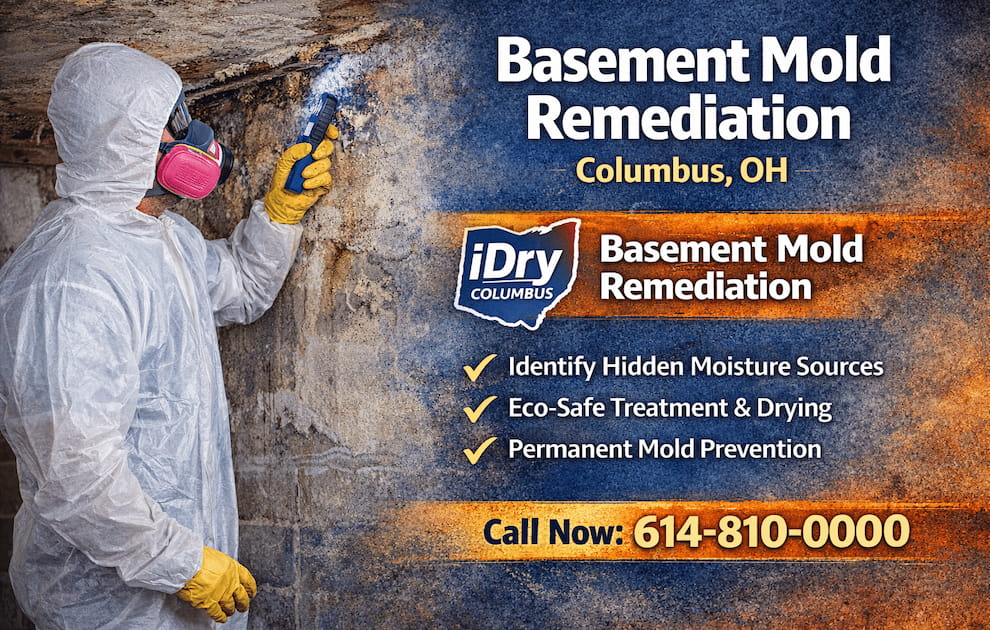
Sewage backup creates the moisture conditions for mold growth within 24–48 hours. If your backup was more than two days ago, mold is a near-certainty without remediation.
Sewage Odor Removal FAQs — Columbus, Ohio
Why does my house still smell like sewage after cleanup?
Is sewage smell dangerous in a house?
Why does my Columbus basement smell like sewage when it rains?
How long does sewage smell last in a house?
Should I call a plumber or a restoration company for sewage smell?
What causes sewer gas smell in a Columbus home?
Can sewage odor get into my HVAC system?
How much does sewage odor removal cost in Columbus?
Does sewage odor go away on its own?
Will homeowners insurance cover sewage odor removal in Columbus?
Request Your Free Sewage Odor Assessment
Free assessment — no obligation. If you have an active backup or strong H2S smell, calling is fastest: 614-810-0000.